
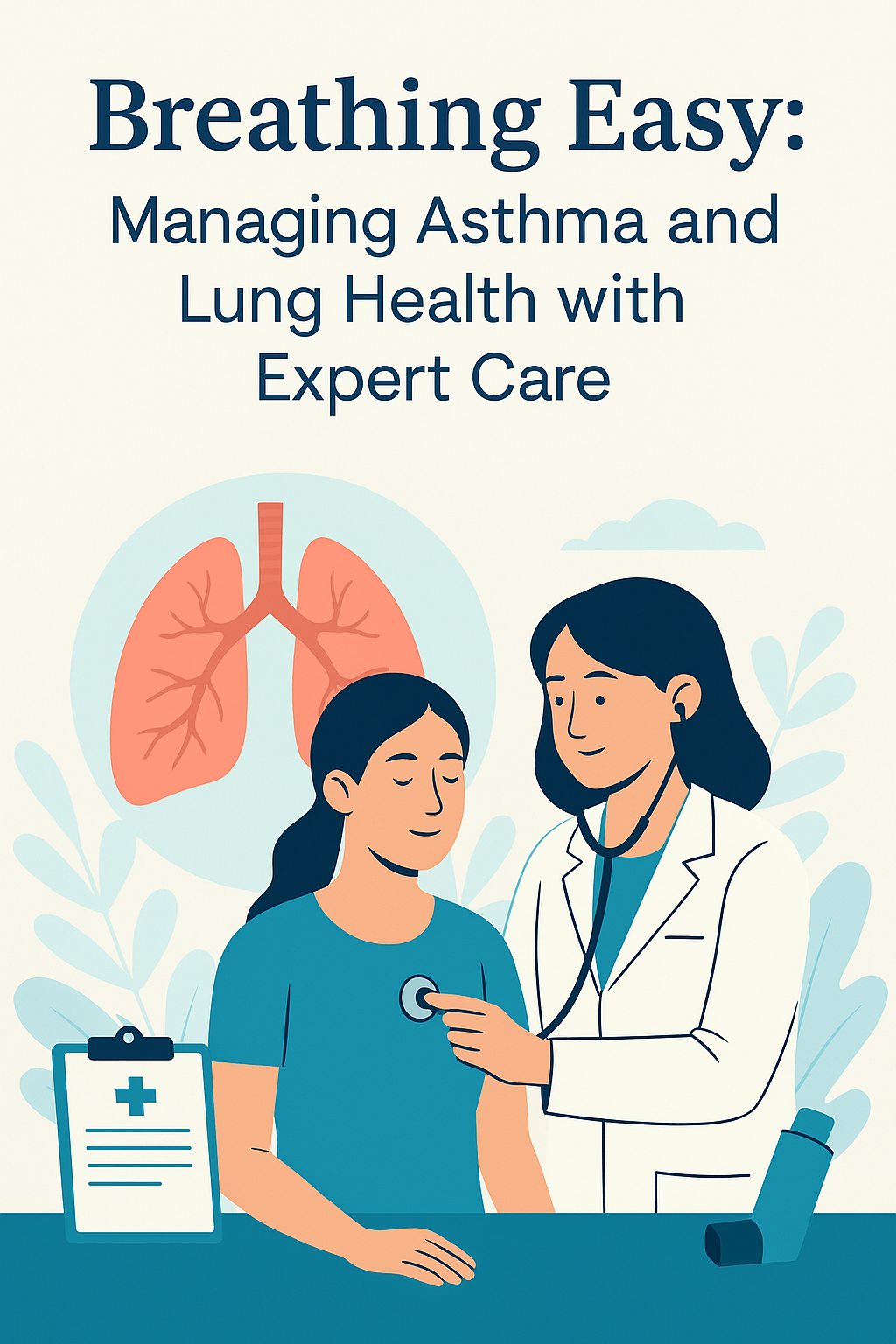
Asthma and other chronic lung conditions affect millions of people worldwide, making it difficult to breathe, exercise, or even sleep comfortably. Fortunately, with the right care, lifestyle adjustments, and medical support, managing asthma and maintaining lung health is completely achievable. This blog guides you through effective strategies to take control of your breathing and live a healthier life.
Asthma is a chronic condition that causes inflammation and narrowing of the airways, leading to symptoms like wheezing, shortness of breath, coughing, and chest tightness. It can be triggered by allergens, pollution, cold air, stress, or physical activity. While asthma cannot be cured, it can be managed effectively with medical treatment and lifestyle changes.
Key symptoms to watch for:
Difficulty breathing, especially during physical activity
Persistent coughing (often at night or early morning)
Wheezing or a whistling sound when breathing
Feeling tightness in the chest
Seeing a pulmonologist or respiratory specialist is essential for proper diagnosis and treatment. These experts can perform lung function tests to understand the severity of your condition and recommend a treatment plan that may include:
Inhalers (both rescue and maintenance)
Bronchodilators to open airways
Steroid medications to reduce inflammation
Allergy treatments if triggers are identified
Regular follow-ups help ensure your treatment stays effective as your condition evolves.
In addition to medical care, everyday choices can significantly influence your lung health. These healthy habits can reduce flare-ups and improve overall breathing quality:
Helpful daily practices:
Avoid smoking and exposure to secondhand smoke
Use air purifiers to reduce indoor allergens
Practice breathing exercises (e.g., pursed-lip breathing)
Stay away from outdoor pollution and wear a mask if needed
Maintain a healthy weight and diet rich in antioxidants
Many people with asthma worry about exercising, but the right types of physical activity can actually strengthen your lungs and reduce the severity of symptoms. Here are some exercises recommended for people with asthma:
A low-impact, beginner-friendly activity that promotes endurance and improves circulation without putting stress on your lungs.
Warm, humid air in indoor pools helps keep airways moist. Swimming also trains your breathing muscles and boosts lung capacity.
Yoga combines gentle movement with mindful breathing. Poses like “Bridge Pose” and “Child’s Pose” open the chest and improve oxygen intake.
Moderate cycling helps build stamina and respiratory strength. It's best to avoid cycling in cold or polluted air.
Include simple techniques like:
Pursed-lip breathing: Inhale slowly through your nose, then exhale slowly through pursed lips.
Diaphragmatic breathing: Focuses on belly breathing, helping you use your diaphragm effectively.
Always consult your doctor before starting any new fitness routine if you have asthma.
Identifying and avoiding your personal asthma triggers is one of the most effective ways to prevent attacks. Common triggers include:
Dust mites
Pollen
Mold
Strong perfumes or chemicals
Cold or dry air
Pet dander
Keeping a journal to track what may be triggering your symptoms can help your doctor tailor your treatment.
Asthma affects all age groups, but managing it in children and older adults requires special attention. Children may struggle to explain their symptoms, while seniors may have overlapping conditions like COPD.
For children:
Ensure they use their inhaler correctly
Inform school staff about their condition
Schedule regular check-ups
For older adults:
Monitor medication side effects
Encourage gentle exercise
Watch for symptoms of confusion or fatigue, which may indicate low oxygen
Asthma can escalate quickly if not treated promptly. Know the warning signs of an asthma emergency:
Severe shortness of breath or wheezing
Inability to speak full sentences
Bluish lips or face
No relief after using a rescue inhaler
If any of these occur, seek emergency medical attention immediately.
With a proper treatment plan, regular exercise, and the support of healthcare professionals, asthma doesn’t have to control your life. Breathing easy is possible when you take charge of your lung health through consistent care, awareness, and positive lifestyle changes. If you or a loved one is struggling with breathing issues, don’t delay. Reach out to a qualified pulmonologist or visit a multi-specialty hospital that offers expert asthma care and lung support. Early diagnosis and the right treatment make all the difference.
Contact us today to schedule an appointment or speak with our lung health specialists. We’re here to help you breathe easier and live healthier—every step of the way.